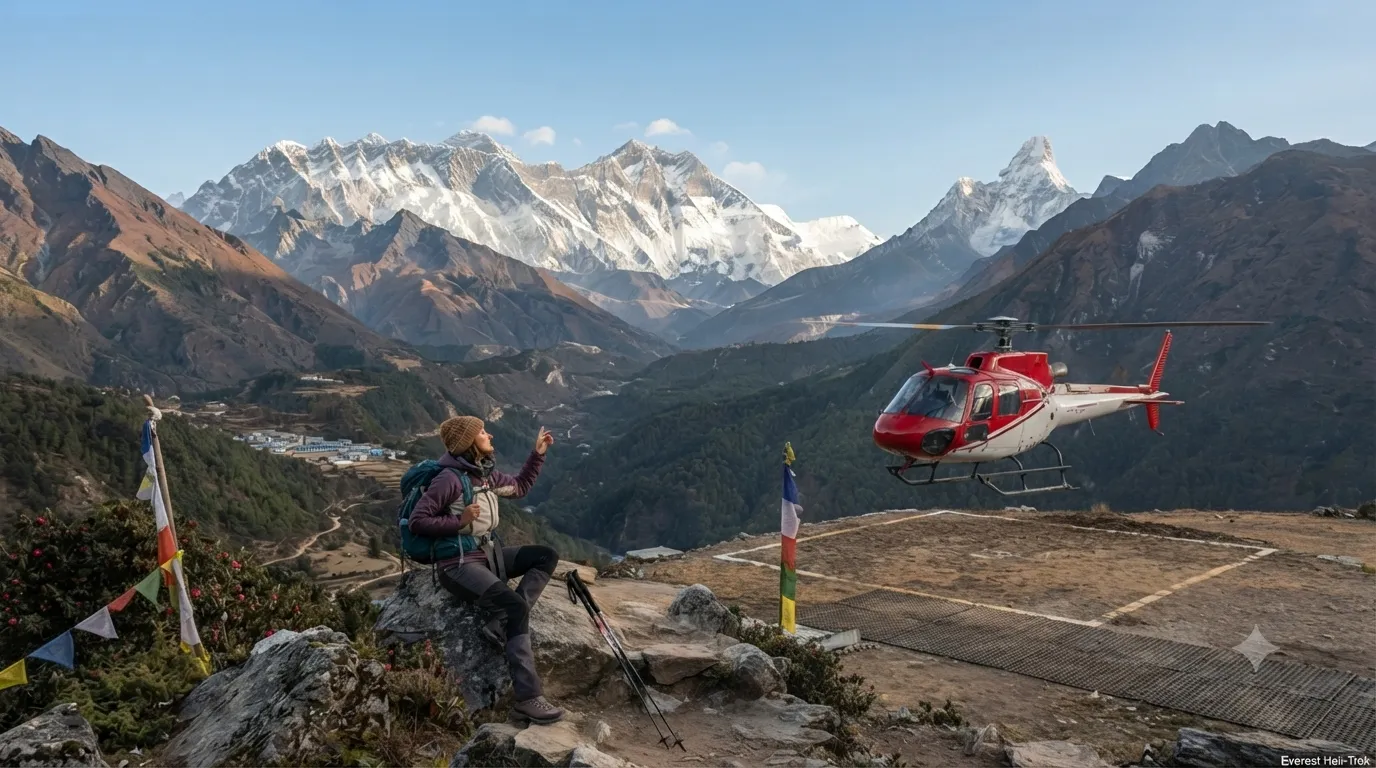
The Everest region of Nepal is home to some of the world’s most spectacular mountain scenery, attracting trekkers, adventurers, and nature lovers from every corner of the globe. For decades, reaching Everest Base Camp has been a dream journey for those seeking breathtaking Himalayan landscapes, rich Sherpa culture, and the thrill of standing in the shadow of the highest mountain on Earth. Today, travelers have a unique option that combines traditional trekking with modern convenience: the Everest trek with helicopter return.
This remarkable adventure allows trekkers to enjoy the classic Everest Base Camp experience while avoiding the lengthy return walk. By trekking to Everest Base Camp and then flying back by helicopter, travelers can experience the best of both worlds—an authentic Himalayan journey and a luxurious aerial escape over the majestic Everest region.
What Is an Everest Trek with Helicopter Return?
An Everest trek with helicopter return follows the traditional Everest Base Camp trekking route from Lukla to Everest Base Camp. Trekkers hike through picturesque Sherpa villages, ancient monasteries, rhododendron forests, and rugged mountain landscapes before reaching the iconic Everest Base Camp.
Unlike the standard itinerary, however, the return journey is completed by helicopter. After exploring Everest Base Camp and climbing Kala Patthar for sunrise views, trekkers board a helicopter that flies over the Khumbu region and returns to Kathmandu or Lukla.
This option has become increasingly popular among travelers who want to enjoy the full trekking experience but have limited vacation time or prefer to avoid retracing the same trail back.
Why Choose an Everest Trek with Helicopter Return?
Save Time
One of the biggest advantages of an Everest trek with helicopter return is the significant time savings. A traditional Everest Base Camp trek generally takes 12 to 16 days, including the return hike. With a helicopter return, the itinerary can often be completed in 9 to 12 days.
This makes the trek ideal for professionals, families, and travelers with tight schedules who still want to experience Everest without spending several weeks in Nepal.
Enjoy Spectacular Aerial Views
The helicopter flight offers a completely different perspective of the Himalayas. As the aircraft soars above glaciers, valleys, and towering peaks, passengers enjoy unforgettable panoramic views of Everest, Lhotse, Nuptse, Ama Dablam, and many other mountains.
The aerial scenery adds an extra dimension to the adventure, making the trip even more memorable.
Reduce Physical Demands
Although reaching Everest Base Camp requires determination and fitness, the return journey can often feel repetitive and physically demanding. Walking downhill for several days can place considerable strain on knees and joints.
A helicopter return eliminates the need for the long descent, allowing trekkers to enjoy the challenge of reaching Base Camp without enduring additional days of trekking.
Experience Luxury in the Himalayas
For travelers seeking comfort alongside adventure, the Everest trek with helicopter return offers an excellent balance. It combines the rugged beauty of the Himalayas with the convenience and excitement of a scenic helicopter flight.
The Classic Everest Base Camp Experience
Despite the luxurious return flight, trekkers still enjoy the complete classic Everest Base Camp experience. The journey includes all the highlights that have made Everest Base Camp one of the world’s most famous trekking destinations.
Lukla: The Gateway to Everest
The adventure begins with a flight from Kathmandu to Lukla. This small mountain airport is known for its dramatic location among steep Himalayan terrain. Upon arrival, trekkers begin their journey through the Khumbu region.
Namche Bazaar
Namche Bazaar is often considered the heart of the Everest region. This vibrant Sherpa town serves as an important acclimatization stop and offers stunning mountain views, comfortable lodges, cafes, and local markets.
Visitors can explore museums, learn about Sherpa culture, and enjoy their first clear views of Mount Everest.
Tengboche Monastery
One of the most spiritual locations on the trek is Tengboche Monastery. Surrounded by snow-capped peaks, this historic Buddhist monastery provides insight into local traditions and religious practices.
The peaceful atmosphere and incredible backdrop make Tengboche one of the trek’s most memorable stops.
Dingboche and Acclimatization
As trekkers ascend to higher elevations, acclimatization becomes essential. Dingboche provides an excellent place to rest and adapt to the altitude while enjoying magnificent views of surrounding peaks.
These acclimatization days help increase safety and improve the chances of successfully reaching Everest Base Camp.
Everest Base Camp
Standing at Everest Base Camp is the ultimate reward for days of trekking. Located at an altitude of approximately 5,364 meters, Base Camp serves as the starting point for climbers attempting to summit Mount Everest.
Trekkers can witness the famous Khumbu Icefall and absorb the incredible atmosphere of this legendary location.
Kala Patthar
No classic Everest Base Camp experience is complete without a hike to Kala Patthar. At 5,545 meters, this viewpoint offers some of the best panoramic views of Mount Everest.
Many trekkers visit Kala Patthar at sunrise when golden light illuminates Everest and the surrounding Himalayan giants.
The Helicopter Return Experience
After completing the Everest Base Camp journey, trekkers embark on one of the most exciting parts of the trip—the helicopter flight.
The helicopter lifts off from the Everest region and provides breathtaking views that are impossible to experience from the trail. Glaciers, icefalls, remote villages, and towering mountain peaks unfold beneath the aircraft.
Passengers often describe this flight as one of the highlights of their entire Nepal adventure. The opportunity to see Everest from the air creates memories that last a lifetime.
Best Time for an Everest Trek with Helicopter Return
Choosing the right season is essential for a successful trek.
Spring (March to May)
Spring is one of the most popular trekking seasons. Temperatures are moderate, skies are generally clear, and rhododendron forests bloom with vibrant colors.
The mountain views during spring are often exceptional, making it an excellent time for both trekking and helicopter flights.
Autumn (September to November)
Autumn is considered the best trekking season in Nepal. Following the monsoon rains, the air becomes crystal clear, providing spectacular visibility.
Stable weather conditions make autumn ideal for the Everest trek with helicopter return.
Winter (December to February)
Winter offers quieter trails and fewer crowds. While temperatures can be extremely cold at higher elevations, clear skies often provide excellent mountain views.
Monsoon (June to August)
Monsoon season brings rain and clouds, particularly at lower elevations. Trekking is still possible, but helicopter operations may occasionally face weather-related delays.
Physical Fitness and Preparation
Although the helicopter eliminates the return trek, reaching Everest Base Camp remains a physically demanding challenge.
Trekkers should prepare by:
-
Engaging in regular cardiovascular exercise
-
Practicing hiking on varied terrain
-
Building leg strength and endurance
-
Improving overall fitness several months before departure
Mental preparation is equally important, as altitude and changing weather conditions can test even experienced hikers.
Accommodation and Food
Throughout the trek, travelers stay in traditional tea houses operated by local families. These lodges provide comfortable accommodation and warm hospitality.
Popular meals include:
-
Dal Bhat (traditional Nepali meal)
-
Fried rice
-
Noodles
-
Soups
-
Pancakes
-
Tea and coffee
As altitude increases, menu prices generally rise due to transportation challenges in the remote region.
Safety Considerations
Altitude sickness is the primary concern during any Everest trek. Proper acclimatization, hydration, and gradual ascent are essential.
Travelers should:
-
Follow the itinerary carefully
-
Drink plenty of water
-
Avoid rushing to higher elevations
-
Inform guides about any symptoms
Experienced guides monitor trekkers closely and help ensure a safe journey.
Who Should Choose This Trek?
The Everest trek with helicopter return is ideal for:
-
Travelers with limited vacation time
-
Adventure seekers wanting a premium experience
-
Trekkers concerned about the long descent
-
Photographers seeking aerial Himalayan views
-
First-time visitors to the Everest region
It provides a perfect balance between traditional trekking and modern comfort.
Conclusion
An Everest trek with helicopter return offers a unique opportunity to experience the Himalayas in an unforgettable way. Travelers can enjoy every highlight of the classic Everest Base Camp experience, including Namche Bazaar, Tengboche Monastery, Everest Base Camp, and Kala Patthar, while avoiding the lengthy return trek.
The combination of challenging mountain trails, rich Sherpa culture, breathtaking scenery, and a spectacular helicopter flight creates an adventure unlike any other. Whether you are a seasoned trekker or embarking on your first Himalayan journey, this trekking option delivers the perfect blend of exploration, achievement, comfort, and luxury.