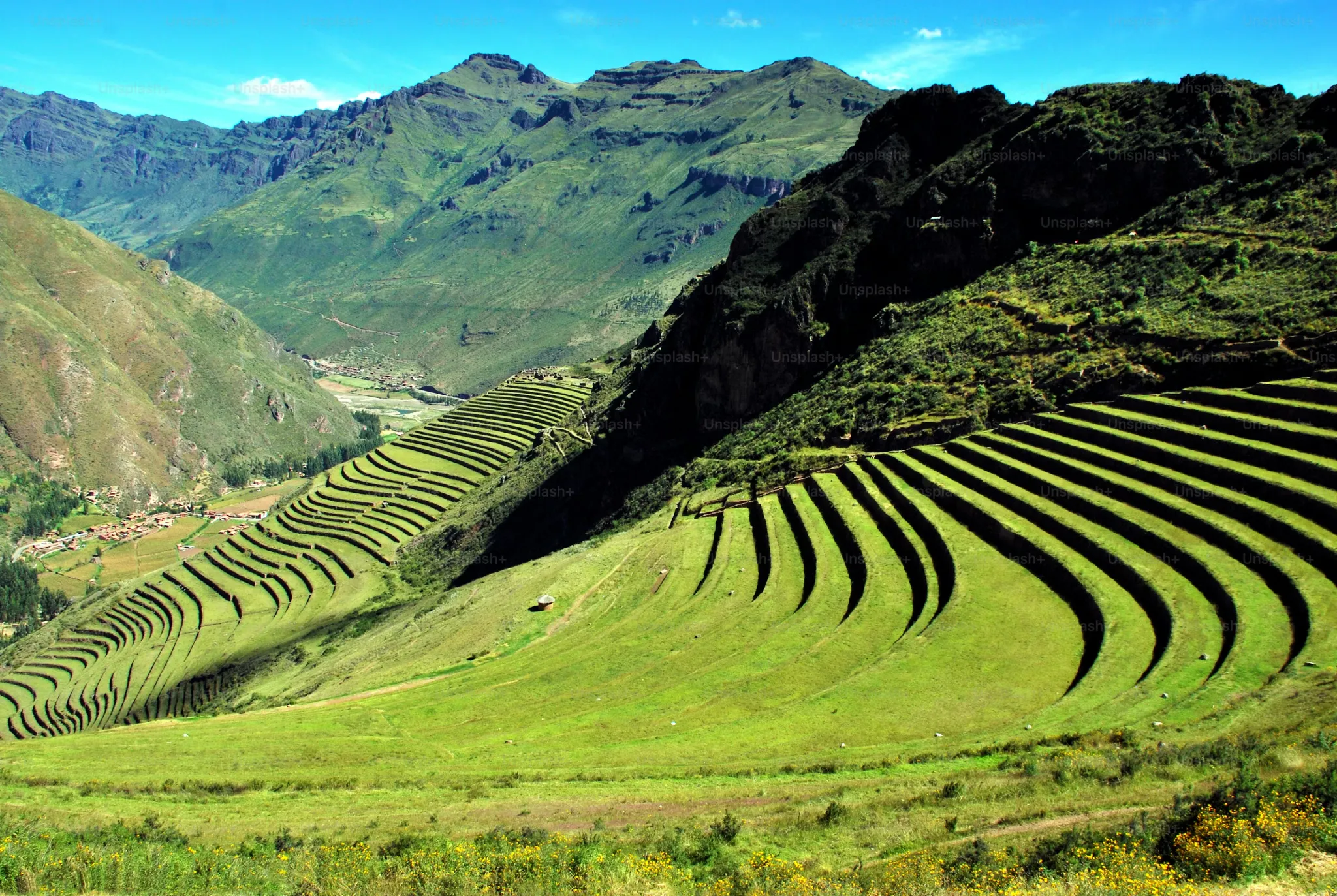
Stretching along the Urubamba River between the ancient capital of Cusco and the legendary citadel of Machu Picchu lies the Sacred Valley of the Incas a region where extraordinary landscapes, archaeological marvels, and vibrant indigenous culture converge to create one of South America’s most captivating destinations. Known to the Incas as the “Willka Qhichwa,” this fertile corridor served as the agricultural and spiritual heartland of their empire, producing abundant corn at altitudes where such cultivation seemed impossible. Today, the Sacred Valley offers travelers an immersive journey through history, where ancient ruins stand alongside colonial churches, traditional markets pulse with contemporary life, and the rhythms of Andean culture continue largely uninterrupted by modernity.
Geography and Climate: Why “Sacred” and “Valley”
The Sacred Valley sits at elevations ranging from 2,800 to 2,900 meters above sea level approximately 600 meters lower than Cusco. This seemingly modest difference creates a dramatically milder microclimate that the Incas recognized and exploited brilliantly. Warmer temperatures, more sunshine hours, and protection from harsh winds by surrounding mountains made the valley exceptionally productive for agriculture, particularly for growing maize, which held ceremonial and nutritional significance in Incan society.
The Urubamba River, called “Willkamayu” or Sacred River by the Incas, flows through the valley’s heart. The Incas believed this river mirrored the Milky Way in the heavens, connecting earthly and cosmic realms. The river’s meandering course created fertile floodplains ideal for terraced agriculture, while its position relative to surrounding peaks created astronomical alignments that informed the Incas’ sophisticated agricultural calendar and religious ceremonies.
Modern travelers appreciate the Sacred Valley’s climate for different but equally practical reasons. The lower elevation eases altitude acclimatization, making it an ideal base before tackling higher sites like Rainbow Mountain or embarking on treks to Machu Picchu. Many visitors now choose to stay overnight in valley towns rather than Cusco, enjoying pleasant weather, stunning mountain vistas, and a more relaxed pace.
Pisac: Archaeology and Artisan Markets
Pisac anchors the eastern end of the Sacred Valley’s tourist circuit, renowned for both its impressive archaeological site and one of Peru’s most authentic traditional markets. The town itself splits into two distinct zones: the colonial village in the valley and the sprawling Incan complex high on the mountainside above.
The Pisac archaeological site represents one of the Inca Empire’s most sophisticated achievements. Extensive agricultural terraces cascade down steep slopes engineering marvels that prevented erosion, captured warmth, and created microclimates for different crops. The upper sections contain ceremonial areas, residential quarters, and defensive fortifications connected by stone stairways and pathways that cling dramatically to cliff faces. The Intihuatana, or “hitching post of the sun,” served astronomical and ceremonial functions similar to its more famous counterpart at Machu Picchu. The site also includes an ancient cemetery where Incan nobility were buried in niches carved into the cliff face.
Down in the town, Pisac’s market operates most vibrantly on Tuesdays, Thursdays, and especially Sundays, when vendors from remote mountain communities descend to sell produce, textiles, ceramics, and crafts. While the main square caters heavily to tourists with alpaca sweaters and reproduction artifacts, the local food market behind it continues to serve primarily Quechua-speaking residents, offering insights into daily life and regional cuisine. Fresh bread baked in traditional outdoor ovens, local cheeses, and an astounding variety of potato and corn types demonstrate the valley’s continued agricultural abundance.
Ollantaytambo: The Living Incan Town
If a single location in the Sacred Valley could claim to be the most historically significant, Ollantaytambo would be a strong contender. This remarkable town functions simultaneously as a living community where descendants of Incas occupy buildings on Incan foundations and as one of the best-preserved examples of Incan urban planning anywhere in Peru.
The archaeological complex dominates the town, with massive terraces rising in tiers toward a ceremonial center perched on the mountainside. The Temple of the Sun showcases some of the Incas’ most impressive stonework: six massive pink granite monoliths fitted together with extraordinary precision. These stones were quarried from a mountain across the valley, transported across the river, and hauled up the mountain using techniques that continue to puzzle modern engineers. Some stones weigh upward of 50 tons, and the precision of their placement some joints are less than half a millimeter wide demonstrates engineering knowledge that seems almost impossible without modern technology.
The town itself preserves its original Incan street layout, with narrow cobblestone passages called “callejones” separating “canchas” walled compounds containing multiple single-room dwellings arranged around central courtyards. Walking these ancient streets, particularly early morning or evening when tourist groups have departed, provides an uncanny connection to the past as residents emerge from 500-year-old doorways to begin their daily routines.
Ollantaytambo also holds strategic importance as the gateway to Machu Picchu. The train station here serves travelers heading to Aguas Calientes, and many trekking routes begin in the surrounding mountains. The town witnessed one of the Incas’ few military victories against Spanish conquistadors when Manco Inca successfully defended the fortress during his rebellion in 1536, flooding the valley floor and raining projectiles on Spanish cavalry from the terraces above.
Moray and Maras: Agricultural Innovation and Ancient Salt
Two sites located slightly off the main valley road deserve special attention for their uniqueness. Moray, an archaeological site unlike any other in the Incan Empire, consists of concentric circular terraces that descend like a massive amphitheater into the earth. Rather than serving defensive or residential purposes, most archaeologists believe Moray functioned as an agricultural laboratory.
Each terrace level creates a distinct microclimate, with temperature variations of up to 15 degrees Celsius between the highest and lowest terraces. This allowed Incan agricultural scientists to experiment with growing different crop varieties at various simulated altitudes, testing and acclimatizing seeds before introducing them to different regions of the empire. The sophisticated understanding of microclimates, drainage, and crop adaptation demonstrated at Moray reveals the Incas’ methodical, scientific approach to agriculture that supported their vast empire.
A short distance from Moray lies Maras, home to the spectacular Salineras de Maras thousands of individual salt evaporation ponds terraced down a mountainside. Fed by a subterranean stream carrying highly saline water from a natural spring, these ponds have been harvested since pre-Incan times. Today, local families maintain the tradition, each owning and working specific ponds that have been passed down through generations.
The salt ponds create an extraordinary visual spectacle, particularly late afternoon when low sunlight illuminates the pools, creating a patchwork of whites, creams, and pinks against the green mountains. Beyond aesthetics, visiting Maras demonstrates how ancient practices continue to support modern livelihoods, with the salt harvested here sold throughout Peru and increasingly valued by gourmet markets for its mineral complexity and artisanal production methods.
Chinchero: Weaving Traditions and Incan Remains
Chinchero occupies the valley’s highest point at approximately 3,760 meters, offering panoramic views across agricultural terraces to snow-capped peaks beyond. This traditional town gained fame for its Sunday market, considered more authentic than Pisac’s, where local farmers trade produce using methods that predate currency, and women in traditional dress sell handwoven textiles created using ancestral techniques.
Several weaving cooperatives in Chinchero offer demonstrations where visitors observe the entire textile creation process from dyeing wool with natural materials like cochineal insects, plants, and minerals, to spinning and weaving on traditional backstrap looms. These aren’t performances staged solely for tourists but actual working facilities where women practice their craft daily, creating textiles for both personal use and sale. The complexity of traditional patterns, each carrying specific cultural meanings, reveals how textiles function as a form of communication and cultural preservation.
Chinchero also preserves significant Incan remains, including impressive agricultural terraces and the foundations of what many scholars believe was the royal estate of Túpac Inca Yupanqui. The colonial church, built atop Incan walls in typical Spanish fashion, contains remarkable 17th-century frescoes that blend Catholic iconography with indigenous symbolic elements.
Urubamba: The Valley’s Modern Heart
The town of Urubamba serves as the Sacred Valley’s commercial center and main population hub. While it lacks major archaeological sites, Urubamba offers practical services, excellent restaurants, and increasingly sophisticated hotels and lodges that make it an ideal base for exploring surrounding attractions. The town’s lower elevation and pleasant climate attract both tourists seeking acclimatization and expatriates drawn to the valley’s quality of life.
From Urubamba, visitors can easily access adventure activities that complement historical site visits. The Urubamba River provides class III and IV whitewater rafting opportunities, while the surrounding mountains offer mountain biking, horseback riding, and paragliding. These activities appeal to travelers seeking active experiences beyond archaeological tourism and provide different perspectives on the valley’s dramatic landscapes.
Cultural Continuity and Living Traditions
What truly distinguishes the Sacred Valley from many heritage sites is its character as a living cultural landscape rather than an archaeological park. Quechua remains the primary language in many communities. Traditional agricultural practices continue on ancient terraces. Festivals celebrating Pachamama (Mother Earth) and mountain deities draw sincere participants, not just folkloristic performances for tourists. Women weave textiles using patterns their great-grandmothers knew, and children grow up speaking both Quechua and Spanish, navigating between ancestral traditions and contemporary Peruvian society.
This cultural continuity creates opportunities for meaningful engagement beyond sightseeing. Community-based tourism initiatives allow visitors to participate in agricultural activities, learn traditional crafts, or share meals with local families. These experiences, when conducted respectfully through ethical operators, provide income to rural communities while fostering cross-cultural understanding.
Planning Your Sacred Valley Visit
Most travelers explore the Sacred Valley as day trips from Cusco or, increasingly, as a multi-day experience staying in valley towns. The “Sacred Valley Tour” offered by countless agencies typically covers Pisac market and ruins, Ollantaytambo, and perhaps Chinchero in a single long day. While efficient, this rushed pace prevents deeper engagement with sites and culture.
A better approach involves spending 2-3 nights in the valley, allowing time to explore archaeological sites thoroughly, attend markets on their proper days, enjoy activities like cooking classes or weaving workshops, and simply absorb the atmosphere of towns and countryside. This pacing also aids altitude acclimatization before proceeding to Cusco or Machu Picchu.
The Boleto Turístico (tourist ticket) required for most Sacred Valley archaeological sites can be purchased as a partial ticket covering valley sites only or as a complete ticket including Cusco attractions. Transportation between valley towns is readily available via colectivos (shared taxis) or private taxis, though organized tours provide convenience and expert guiding.
Conclusion
The Sacred Valley transcends typical tourist destinations by offering layers of experience that reward both casual visitors and serious cultural explorers. Its archaeological sites showcase Incan engineering and agricultural genius at their finest. Its markets and communities demonstrate cultural resilience and continuity across five centuries of profound change. Its landscapes, terraced mountainsides, rushing rivers, and distant snow peaks create settings of extraordinary beauty. Whether you spend a single day or an entire week, the Sacred Valley provides essential context for understanding Incan civilization while revealing that this civilization’s descendants continue shaping the valley’s character today.
Key Takeaways
- Lower Altitude Advantage: At 2,800-2,900m versus Cusco’s 3,400m, the Sacred Valley offers milder climate and easier acclimatization for visitors
- Major Archaeological Sites: Pisac (terraces and ceremonial center), Ollantaytambo (fortress and living Incan town), Moray (agricultural laboratory), and Chinchero (weaving center with ruins)
- Authentic Markets: Pisac (Sunday, Tuesday, Thursday) and Chinchero (Sunday) offer genuine local commerce alongside tourist crafts
- Maras Salt Ponds: Pre-Incan salt evaporation terraces still harvested by local families using traditional methods
- Time Recommendation: Minimum 2-3 days to explore major sites properly versus rushed single-day tours from Cusco
- Strategic Location: Serves as gateway to Machu Picchu via Ollantaytambo train station and starting point for numerous trekking routes
- Living Culture: Quechua language, traditional agriculture, weaving practices, and indigenous customs continue in working communities, not as museum pieces
- Boleto Turístico Required: Tourist ticket needed for most archaeological sites; partial valley ticket or complete ticket including Cusco sites available
- Best Accommodations: Urubamba offers most services; Ollantaytambo provides historical atmosphere; boutique lodges scattered throughout valley