Some roads simply get you somewhere. The Dempster Highway does something different: it pulls you out of ordinary life and drops you into a landscape so big and quiet that your phone stops mattering. If you have a week to spare and a taste for wild places, a Dempster Highway Adventure Yukon (7 days) is one of the most memorable road trips in North America.
This guide explains what to expect, how a week on the highway can unfold, and how to prepare for the gravel, the distances, and the weather.
What Is the Dempster Highway?
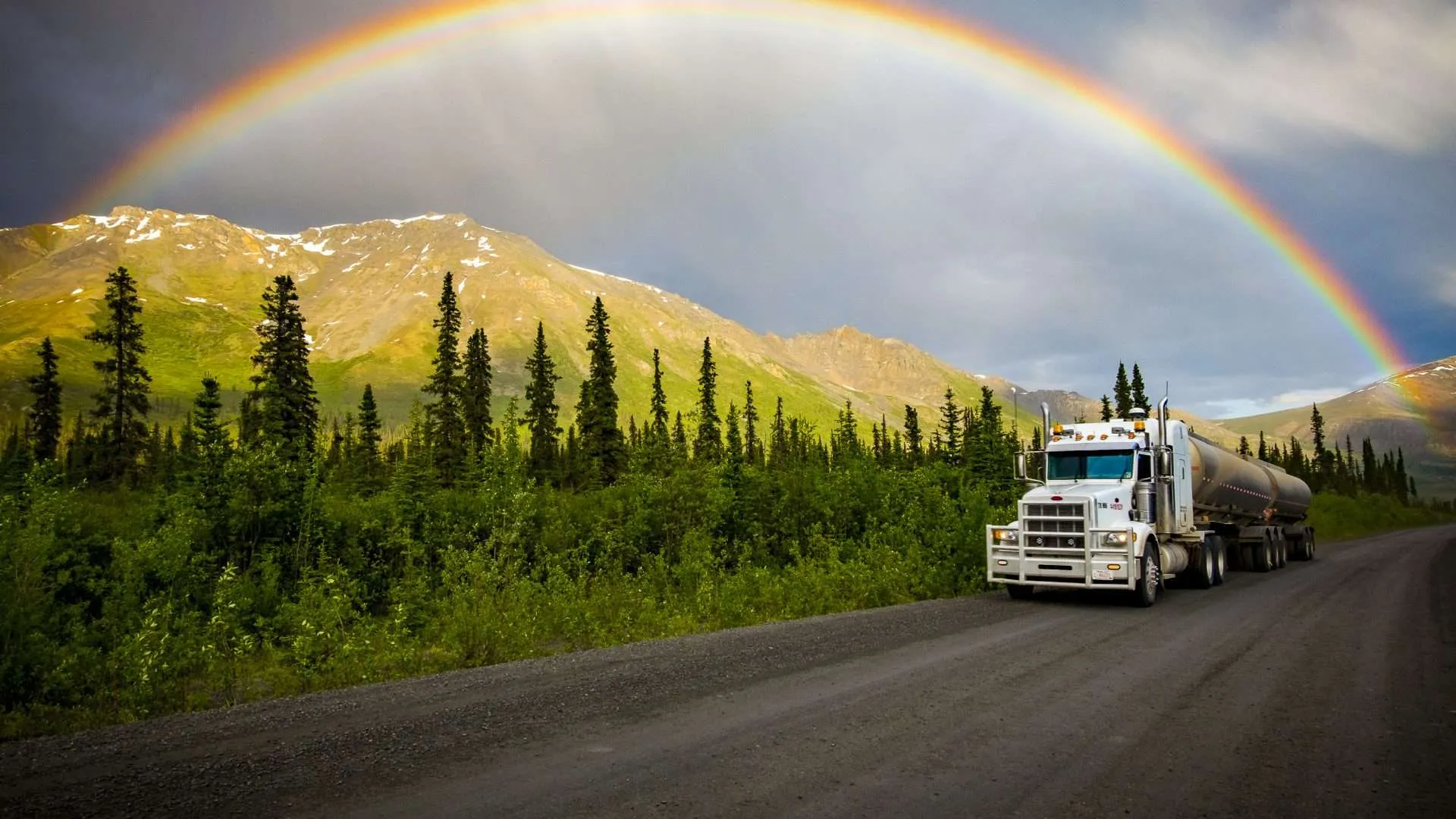
The Dempster Highway runs roughly 736 kilometres from a junction near Dawson City, Yukon, to the town of Inuvik in the Northwest Territories. Most of it is gravel, and it crosses two mountain ranges, three river valleys, and the Arctic Circle along the way.
Traffic is light, services are few, and the scenery changes constantly. One hour you are driving beside jagged granite peaks, the next across open tundra where caribou drift over the horizon. It is not a difficult road for a prepared traveler, but it rewards planning and punishes carelessness.
Why Seven Days Works So Well
Seven days is a comfortable length for a Dempster Highway Adventure Yukon (7 days) trip. It lets you drive to Dawson City, travel the highway without rushing, stay overnight at remote lodges, and still have time for hikes, photo stops, and a little history. Shorter trips tend to turn into driving marathons. A week lets you actually look around.
A Sample Seven-Day Plan
Every traveler paces things differently, but this outline is a good starting point.
Day 1: Whitehorse to Dawson City. Drive north along the Klondike Highway, a long but easy day on pavement. Stop for lunch at a roadside cafe, and arrive in Dawson in time to wander the wooden boardwalks.
Day 2: Dawson City. Spend the morning exploring gold rush history, visit a museum, or try gold panning. Fill your fuel tank, check your spare tires, and buy snacks and water for the road ahead.
Day 3: Dawson City to Tombstone and Eagle Plains. Turn onto the Dempster and enter Tombstone Territorial Park, where sharp, dark peaks rise above colorful tundra. Take a short hike near the interpretive centre, then continue to Eagle Plains, the only fuel and lodging stop along the Yukon portion.
Day 4: Arctic Circle and onward. Stop at the Arctic Circle marker for the classic photo, then drive on toward the Northwest Territories. Many travelers cross the Peel and Mackenzie rivers by ferry and continue to Inuvik.
Day 5: Inuvik. Rest, refuel, and explore the town. Some travelers add a drive or flight to Tuktoyaktuk on the Arctic Ocean, depending on time.
Day 6: Return south. Head back toward Eagle Plains. The scenery looks completely different in the opposite direction, so you rarely feel like you are repeating yourself.
Day 7: Back to Dawson City. Drive through Tombstone again, arrive in Dawson, and celebrate with a hot meal.
If you prefer a slower pace, you can stay within the Yukon portion and use the extra days for hiking and wildlife watching instead of continuing north.
When Is the Best Time to Go?
The main driving season runs from about mid-June to early September. Each part of that window has its own character.
Late June and July. Long daylight hours, the midnight sun, and green hillsides. Insects can be active, so bring repellent.
August. Warm days gradually give way to cooler evenings. Berries ripen, and the first autumn tints appear.
Late August to early September. Many people consider this the finest window. The tundra turns red, orange, and gold, mosquitoes fade, and Tombstone looks like a painting. Weather can shift quickly, so pack for cold.
Road and ferry conditions vary, so check official highway updates before and during your trip.
Preparing Your Vehicle
The Dempster is gravel, and gravel is hard on tires. Flat tires are the most common problem, so carry two full-size spares if you can, along with a jack, a tire repair kit, and a compressor. Reliable travelers also carry extra water, food, a first aid kit, a satellite communicator, and a paper map, since cell coverage is spotty or absent for long stretches.
Fuel stops are limited. Fill up in Dawson City or at the highway’s start, again at Eagle Plains, and at the next available stations in the Northwest Territories. Never assume you can top up later.
If you do not own a suitable vehicle, rent from an operator that explicitly allows Dempster travel. Some rental agreements forbid gravel highways, so read the fine print.
Wildlife and Scenery to Watch For
The Dempster is famous for wide open views and wildlife. Caribou, moose, Dall sheep, grizzly bears, golden eagles, and ptarmigan are all possible sightings. Keep a respectful distance, never feed animals, and pull completely off the road before stopping.
Beyond wildlife, look for permafrost features, braided rivers, and the strange light that comes with northern latitudes. Bring binoculars and a camera with spare batteries.
Practical Tips for a Smooth Journey
-
Drive slowly and keep your headlights on. Dust and loose gravel reduce visibility.
-
Book lodging in advance, especially at Eagle Plains and Inuvik, where rooms are limited.
-
Carry cash and snacks, since some stops keep irregular hours.
-
Respect Indigenous communities and lands along the route, and ask before taking photographs of people.
-
Leave extra time. A spectacular view will make you stop more often than you planned.
Frequently Asked Questions
Do I need a 4×4 for the Dempster Highway?
Not necessarily. A reliable vehicle with good tires and decent clearance is usually enough in dry conditions. Rain and mud can change that quickly.
Is the highway open all year?
The road itself is generally open year-round, but ferries operate only in the warm season, and winter travel requires special preparation.
Can I do this trip on a guided tour?
Yes. Several operators run guided Dempster journeys, which can be helpful if you would rather not handle the driving and logistics yourself.
Final Thoughts
A Dempster Highway Adventure Yukon (7 days) is not about reaching a destination quickly. It is about slowing down, watching the land change, and feeling small in the best possible way. Prepare your vehicle, pack with care, stay flexible, and let the highway do the rest. You will likely return with dusty tires, full memory cards, and a new idea of what wilderness really means.