


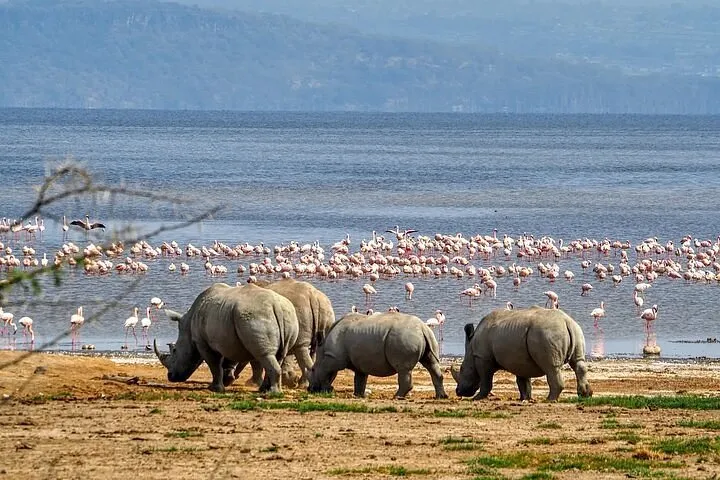
Lake Nakuru is small enough to cover in a single morning, yet it holds some of the most reliable rhino sightings in Kenya. This article explains how rhino tracking works in the park and how to plan a short visit that still feels complete.
A Sanctuary Built Around Rhino Protection
Lake Nakuru was gazetted as a national park in 1968 and later fenced to create a safe refuge for endangered wildlife. Kenya Wildlife Service rangers patrol the boundary daily, and the park now shelters one of the largest rhino populations in the country. This protection matters because poaching once pushed both species toward the edge. Today, guests who join a Lake Nakuru rhino sanctuary tour see the result of decades of careful management, with calves, mothers, and bulls often visible within a short drive of the main gate.
How Rhino Tracking Works on the Ground
Tracking here is a patient, guided process rather than a chase. Experienced drivers know where rhinos rest during the day, usually near acacia woodland and grassy slopes. They watch for fresh dung, footprints, and bird behavior, especially oxpeckers that follow large animals. Guides often radio each other to share locations, which saves time and fuel. Visitors stay inside the vehicle, keep voices low, and let the animals move naturally. Early morning and late afternoon give the best light and the most activity, so photographers and casual travelers both leave satisfied.
Black Rhino and White Rhino: Spotting the Difference
Many visitors want to know which rhino they are looking at, and the answer starts with the mouth. White rhinos have a wide, square lip built for grazing, so they are usually seen with their heads low in the grass. Black rhinos have a pointed, hooked lip for browsing leaves and shrubs, and they tend to be more cautious. White rhinos are generally larger and calmer, while black rhinos are rarer and more thrilling to find. Spotting both in one outing is realistic here, even within a few hours.
More Than Rhinos: Wildlife Beyond the Fence
Rhinos may be the headline, but the park offers much more within its compact borders. Rothschild’s giraffes browse the woodland, while lions and leopards hide in the forest and on rocky ridges. Buffaloes, waterbucks, and impalas fill the grasslands, and hippos wallow near the shoreline pools. Birdwatchers can add hundreds of species, from fish eagles to pelicans. Because distances are short, you move from one habitat to another quickly, which keeps the drive lively and gives every hour on safari a fresh sighting worth photographing.
Why a Short Stay Still Feels Complete
Lake Nakuru rewards travelers who have limited time. The park covers a small area so that a full game drive can be completed in one long morning or afternoon. Rhinos, giraffes, buffaloes, and flamingo flocks often appear before lunch, which reduces the waiting that other destinations require. An overnight stay lets you add a sunrise drive and a lakeside viewpoint visit. By the end, you have seen varied habitats, close animal encounters, and wide scenery, so the trip feels balanced and truly satisfying rather than cut short.
Pairing Nakuru with a Wider Kenyan Itinerary
Nakuru also fits neatly into longer routes. It sits roughly three hours from Nairobi by road, and it links easily with Naivasha, Nairobi National Park, and the Maasai Mara. Travelers who want to see every iconic species can combine it with a Kenya Big Five safari tour, using Nakuru for rhinos and the Mara for elephants and lions. This pairing spreads the experience across different landscapes, avoids repetition, and gives each stop a clear purpose. Careful planning ensures comfortable drive times and enough rest between early morning starts.
A Short Visit, Fully Lived
A day or two at Lake Nakuru is enough to see rhinos, flamingos, and lakeshore birds if the timing is right. Build in a sunrise drive, and the visit will feel fuller than its size suggests.


